What are the types of speech bubbles in comics?
Comics use six main types of speech bubbles: the speech balloon for normal talk, the thought bubble (a cloud), the burst for shouting, the dashed balloon for whispers, the caption box for narration, and the tall manga balloon. Each shape tells the reader how a line sounds before they read a word. Below: what every type means, the less common balloons for radios, robots and weak voices, how manga does it, and the lettering rules that keep a page easy to read.
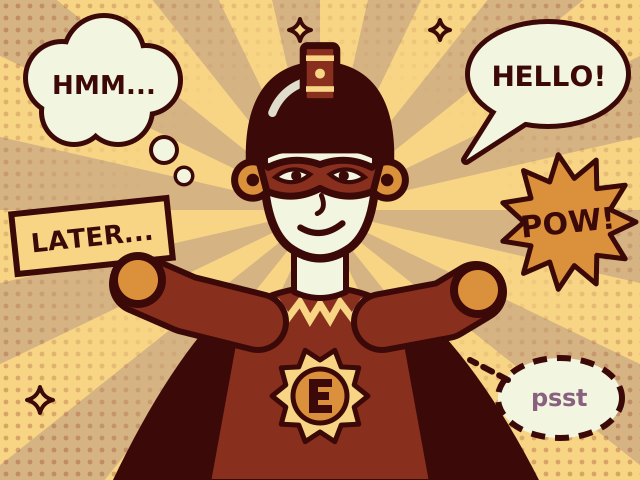
The types at a glance
- Speech balloon: an oval with a pointed tail. Normal spoken dialogue.
- Thought bubble: a cloud with a trail of small circles. What a character thinks but doesn't say.
- Burst: a spiky outline. Shouting, screaming, sudden alarm.
- Whisper: a dashed outline, often with smaller text. Quiet or secret speech.
- Caption box: a rectangle with no tail. The narrator, a time or place, or a character's inner voice.
- Manga balloon: a tall oval with short, stacked lines. The standard balloon of translated and English-language manga.
Letterers call them balloons more often than bubbles, so "speech balloon" and "word balloon" mean the same thing as "speech bubble". The pointer that links a balloon to its speaker is the tail.
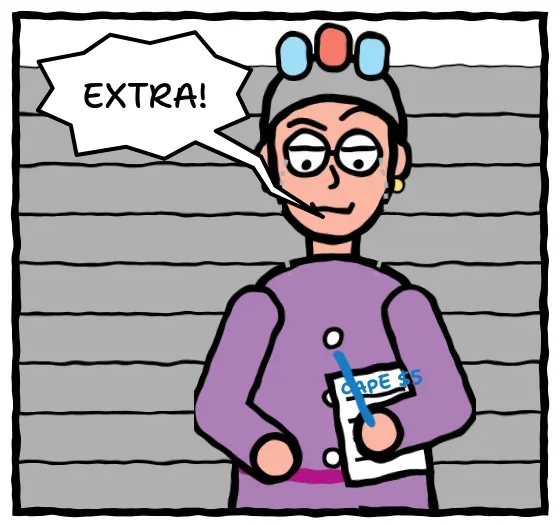
The examples below are panels of our webcomic, Hero for Hire (Hourly), lettered with our free Comic Lettering Tool.
The speech balloon
The everyday balloon: a smooth oval, or a rounded rectangle in some styles, with a tail that narrows towards the speaker. Most balloons on most pages are this one, which is why every other type works: the reader notices when the shape changes.
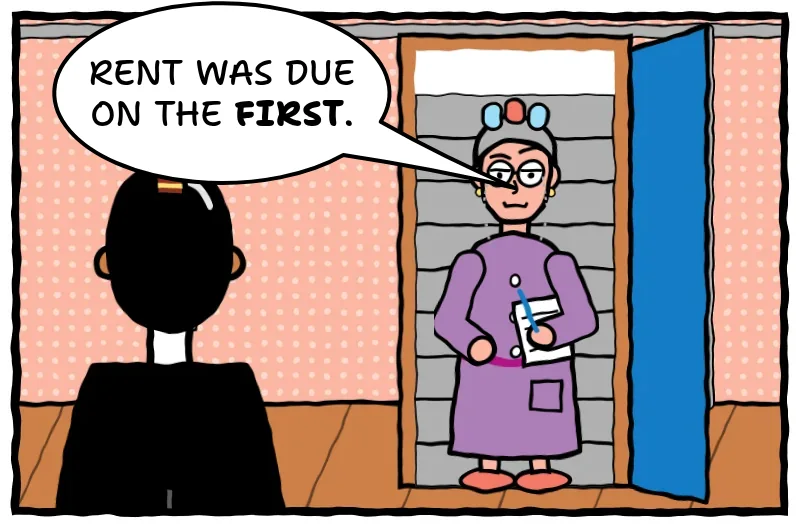
- The tail points at the mouth, not at the body, and stops short of it. A long tail snaking across a panel is a sign the balloon is in the wrong place.
- Off-panel speakers: when someone speaks from outside the panel, the tail runs to the panel border in their direction. Some editors drop the tail entirely in that case.
- Linked balloons: when one character says two things with a pause between them, two balloons are joined by a short connector, or the second one is tucked partly behind the first. It reads as one speaker taking a breath.
- The text fits the balloon, with an even margin all round. Letterers break the lines so the text block itself is roughly oval or diamond-shaped, which keeps the balloon small.
The thought bubble
The thought bubble is a cloud with scalloped edges. Instead of a tail it has a trail of two or three circles that get smaller towards the thinker's head, so the reader knows no one else in the panel hears it.
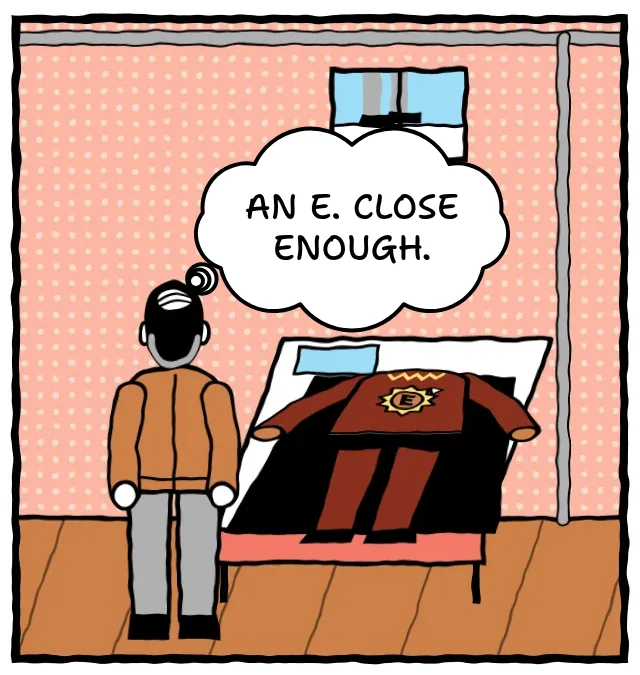
Thought bubbles are less common than they used to be. Many mainstream superhero comics dropped them in the 2000s in favor of first-person caption boxes, which read as a narrator's voice and fit a more cinematic style. They are still common in newspaper strips, children's comics and comedy, where a cloud over someone's head is part of the joke.
Tip: use one approach for inner thoughts and stick to it for the whole comic. Switching between thought clouds and captions halfway through makes readers wonder whether something changed.
The shout, or spiky speech bubble
A spiky speech bubble, also called a burst or scream balloon, means the line is shouted. The outline is jagged and irregular, often with a heavier stroke than a normal balloon, and the tail is frequently a zigzag like a lightning bolt. The text inside is usually bigger and bold.
The more spikes and the bigger the balloon, the louder it feels, so keep the strongest burst for the loudest moment. If every line on the page is in a burst, none of them stands out. A burst is still speech; sound effects such as BOOM or CRASH are lettered straight onto the art, without a balloon.
The whisper balloon
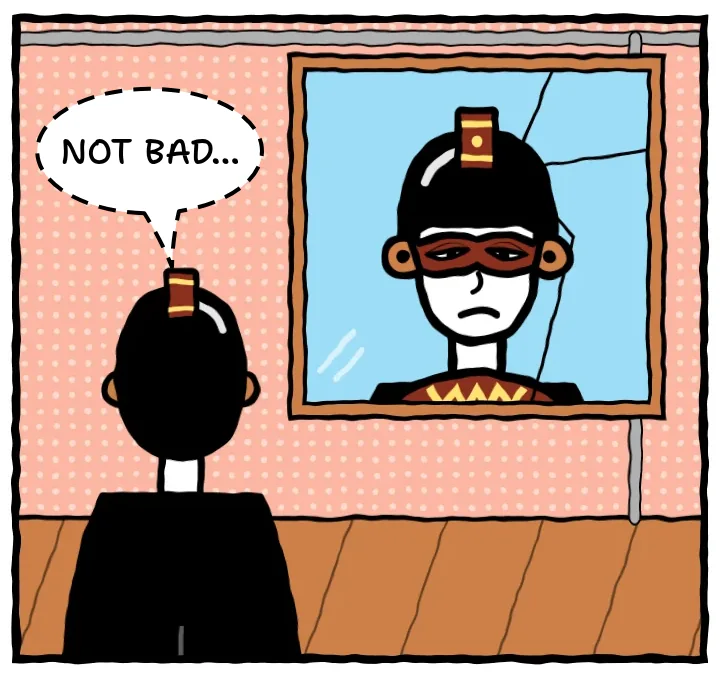
A whisper balloon has a dashed or dotted outline, as if the voice were barely there. Letterers also show whispers with smaller text in a normal balloon, or with a gray outline instead of black. In some comics the text itself turns gray or italic.
Use the whisper for lines other characters in the panel shouldn't hear, or for a voice that is fading: someone falling asleep, or hurt.
Caption boxes
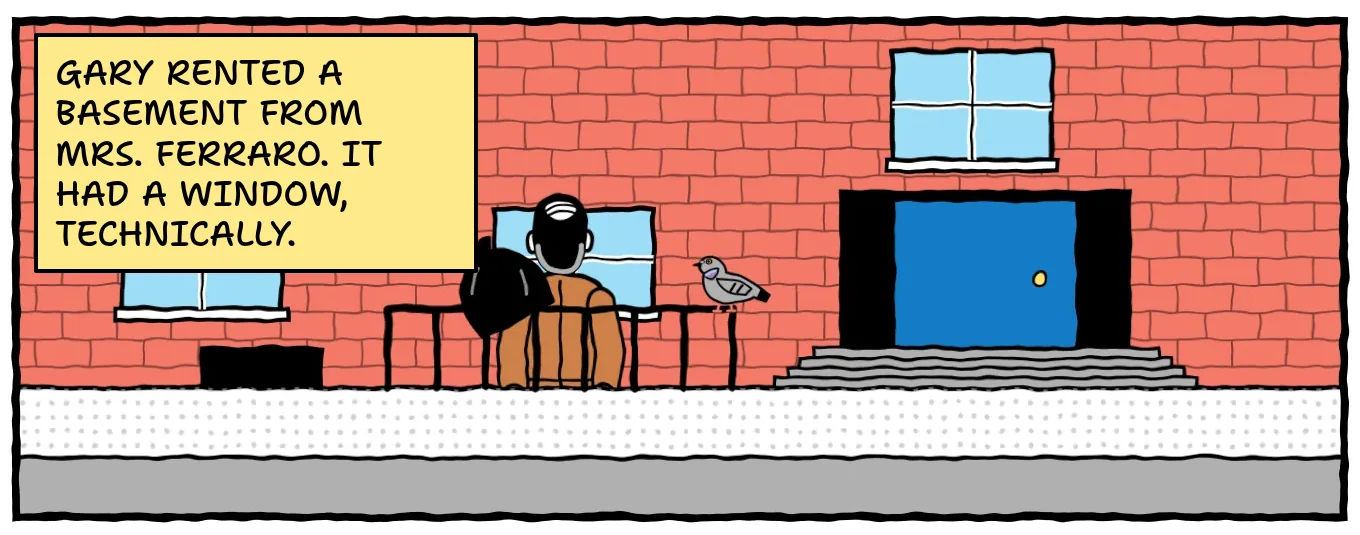
A caption is a box, usually rectangular and without a tail, placed along the edge of a panel. It holds text that nobody in the scene says out loud:
- Narration: the storyteller's voice, as in a novel.
- Time and place: "Meanwhile…", "Later that night", "Paris, 1923".
- A character's inner voice, the modern replacement for thought bubbles. Many comics give each narrator's captions their own color so readers always know whose head they are in.
Captions are traditionally yellow or white with a black outline. A caption with quotation marks continues what a character is saying over a different scene.
Radio, robot and other special balloons
Beyond the six main types, letterers change the outline whenever a voice sounds different:
- Radio, TV and phone: a jagged or squared-off outline, with a zigzag tail pointing at the device rather than a person.
- Robots and computers: square balloons, sometimes in a different color or with a typewriter-style font.
- Weak or shaky voices: a wobbly outline.
- Cold or cruel words: icicles hanging from the bottom of the balloon.
- Monsters and otherworldly characters: a colored balloon, a rough outline or an unusual font that stays the same every time they speak.
- Singing: a normal balloon with music notes in the text.
These are conventions, not rules. What matters is that each special balloon means the same thing every time it appears in your comic.
Manga speech bubbles
Japanese is lettered in vertical columns, so manga balloons are tall ovals. Translated and English-language manga keep that shape: the text goes in short, centered lines stacked one above the other, usually in capitals. Manga also uses thought clouds, bursts for shouting and boxed narration, but it often prints asides and small remarks straight onto the art, outside any balloon.
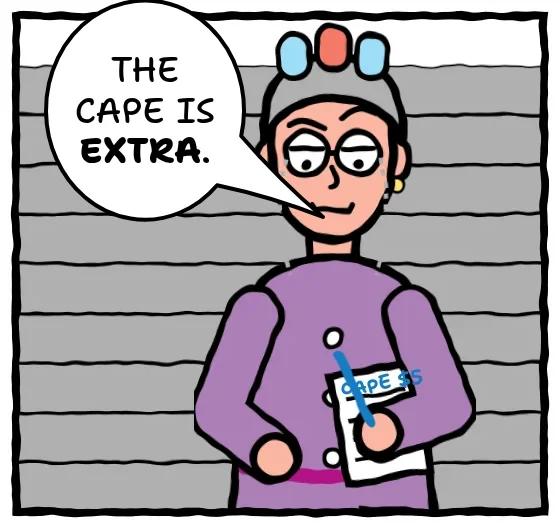
The other difference is direction. Manga panels, and the balloons inside them, are read from right to left, so the first speaker's balloon goes at the top right of the panel. Our manga speech bubble generator makes tall balloons and keeps pages in right-to-left order.
The types on a real page
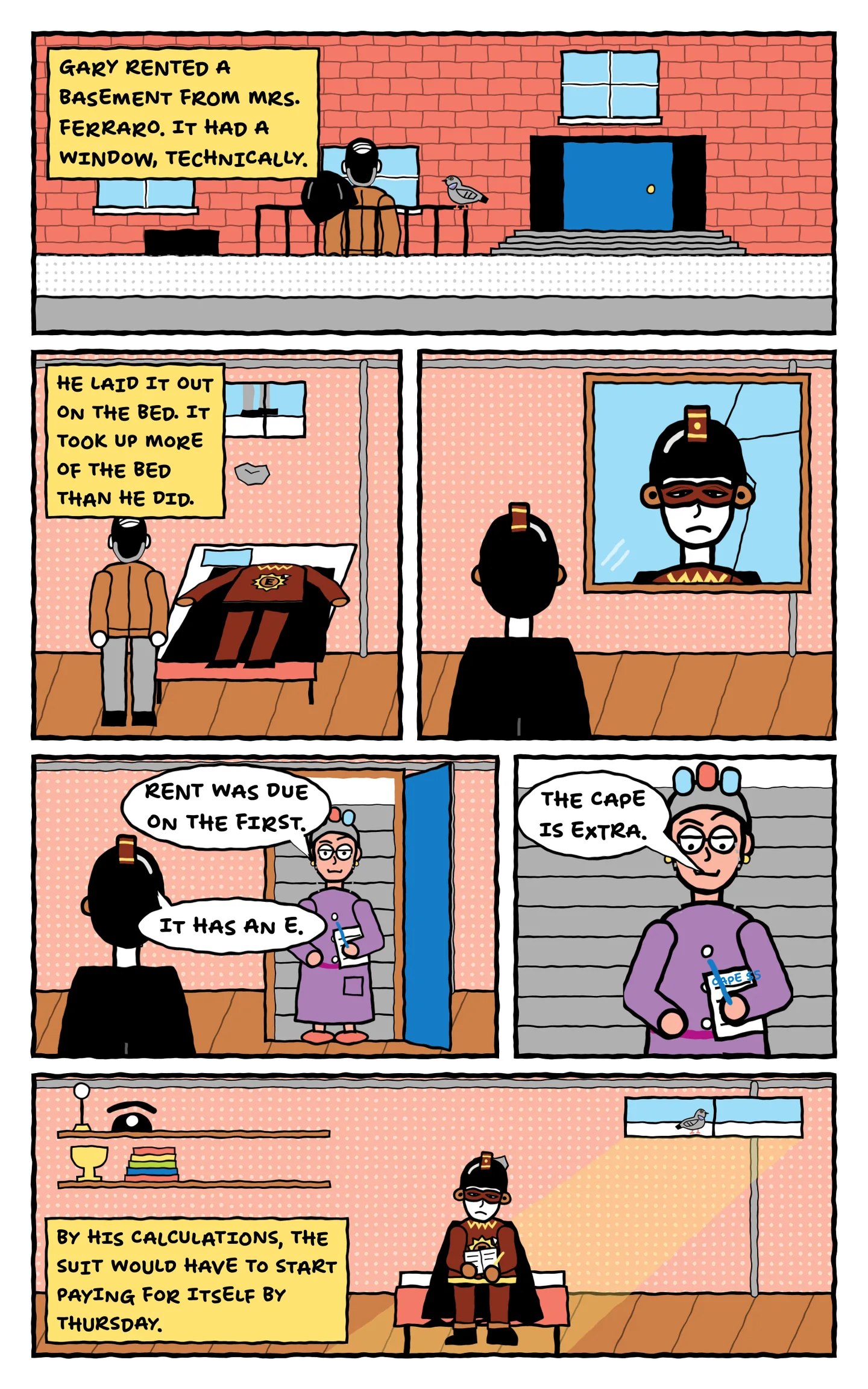
Our own webcomic, Hero for Hire (Hourly), shows how the types share a page. Page 1 is told entirely in caption boxes: the narrator introduces Gary and the town, and nobody speaks. Page 2 mixes both: captions carry the narration, and speech balloons carry the short exchange between Gary and his landlady. Each page has a transcript below it, so you can compare the text with how it was lettered.
Lettering tips
- Place balloons in reading order. Whoever speaks first gets the balloon higher up and further left (further right in manga). If the order is wrong, no tail will fix it.
- Leave room when you draw. Balloons should cover background, never faces or hands.
- Keep balloons short. Split a long speech into two linked balloons, or across two panels.
- Letter in capitals, as most comics do, and stress words with bold rather than more capitals.
- Keep the same font and size throughout, and change them only when the voice changes.
- Don't cross tails, and avoid tails that cross a speaker who isn't talking.
Our free Comic Lettering Tool follows these conventions for you: it has speech balloons, thought clouds, shout bursts, dashed whispers, captions and tall manga balloons. Each balloon sizes itself to the text, you drag a dot to point its tail, and you can export each page as PNG or JPEG, the lettering alone as SVG, or the whole comic as a CBZ. It runs in your browser, your pages never leave your device, and what you letter is yours to sell.
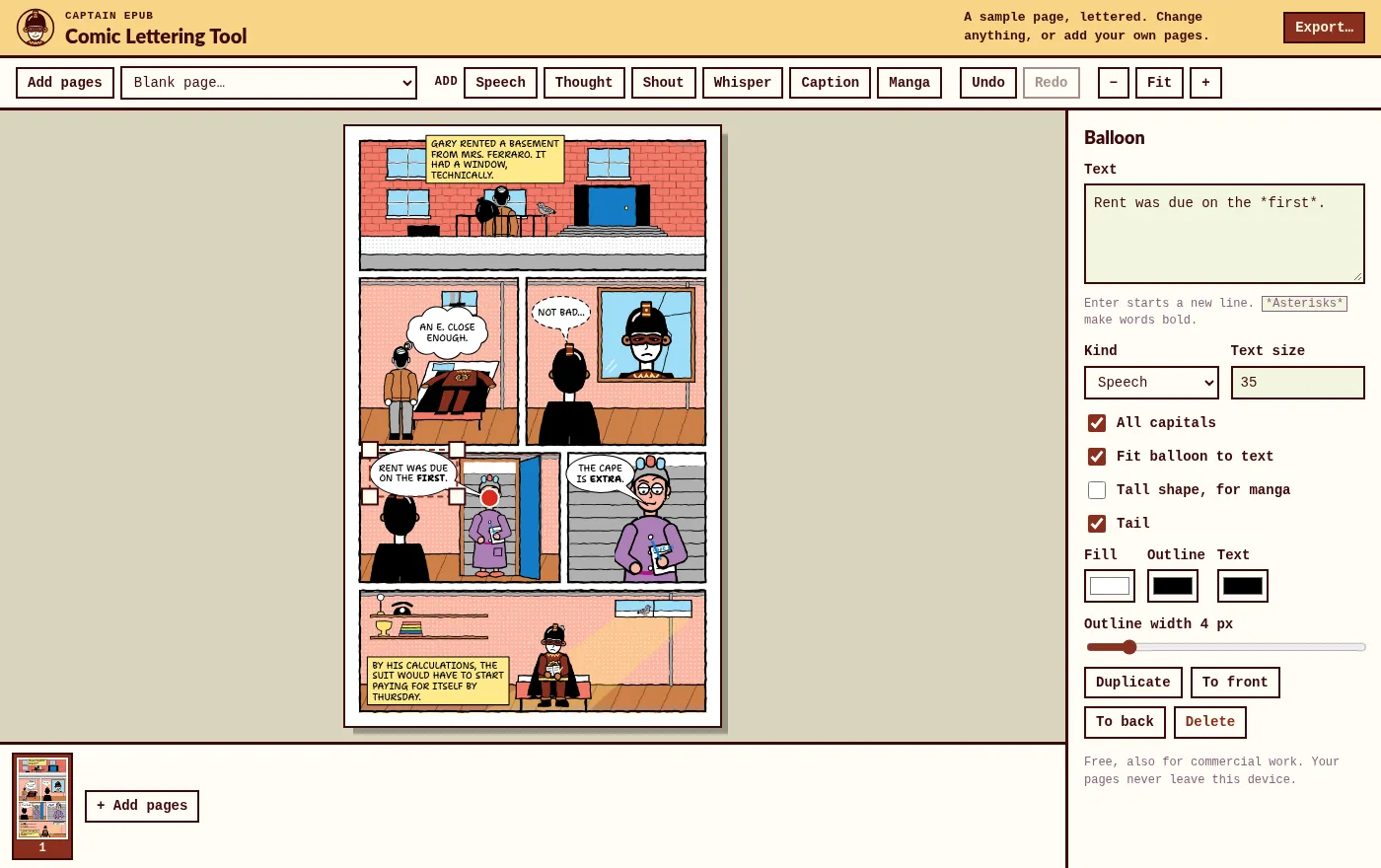
Letter your pages for free
Speech, thought, shout, whisper, caption and manga balloons on your own pages, exported at full size. No account, no watermark, also for commercial work.
Open the lettering toolOnce the pages are lettered, the CBZ opens in our free online reader, and the CBZ to EPUB converter turns it into an ebook for your own e-reader; how to read comics on a Kindle covers the Kindle route. To sell the comic on Kindle, Apple Books, Kobo and Google Play, the Comic & Manga EPUB Kit turns your pages into a fixed-layout EPUB ready for the stores.
Frequently asked questions
What is a speech bubble called in comics?
A speech balloon or word balloon. Letterers say "balloon"; "speech bubble" is the everyday name. The pointer to the speaker is the tail.
What does a spiky speech bubble mean?
Shouting, screaming or a sudden, loud reaction. On a radio or TV it can also mean an electronic voice, depending on the comic.
What does a dashed speech bubble mean?
A whisper: speech that is quiet or meant for one person only.
What is the cloud-shaped speech bubble for?
Thoughts. The cloud with a trail of small circles shows what a character is thinking, and nobody else in the scene hears it.
What does a speech bubble without a tail mean?
Usually the speaker is off-panel, or the text is a caption rather than speech. Some comics also leave the tail off when it's obvious who is talking.